I can't believe that it's coming on a year since my last post. It has been one eventful 11 months and by our Lord's grace, I'm still here and doing well.
In June I was a member of a panel that presented the Bronchiolitis Obliterans Syndrome (BOS) Externally-led Patient-Focused Drug Development Meeting to the FDA. This was a very interesting experience that will hopefully lead to more patient centered clinical trials. More quality trialsWednesday, November 23, 2022
The "It's Been a Long Time Since I've Written a Post" Post
Saturday, January 8, 2022
Seven Years Later
Lungs and pleura: Postsurgical change of bilateral lung transplant. Mild posterior right pleural thickening, unchanged. No pneumothorax or pleural effusion. No central endobronchial mass. Complete collapse and bronchiectasis of right upper lobe, unchanged.
Subtle patchy ground glass opacities of each lung base persists but have decreased. There is a mild degree of mosaic attenuation of the lungs on expiratory imaging, similar to previous studies. Hyperlucency of right lower lobe most evident involving superior segment, unchanged. Minimal subpleural reticulation at each lung base similar to previous studies.
Focal, branching opacity at ventral lingula adjacent to chronic subsegmental atelectasis or scarring, is likely related to endobronchial mucous plugging, unchanged compared with previous studies. No consolidation. A few scattered small bilateral pulmonary nodules measure 0.4 cm or less in diameter and are unchanged. No new nodules.
Tuesday, August 31, 2021
SARS-COV-19 (COVID-19) With a Lung Transplant
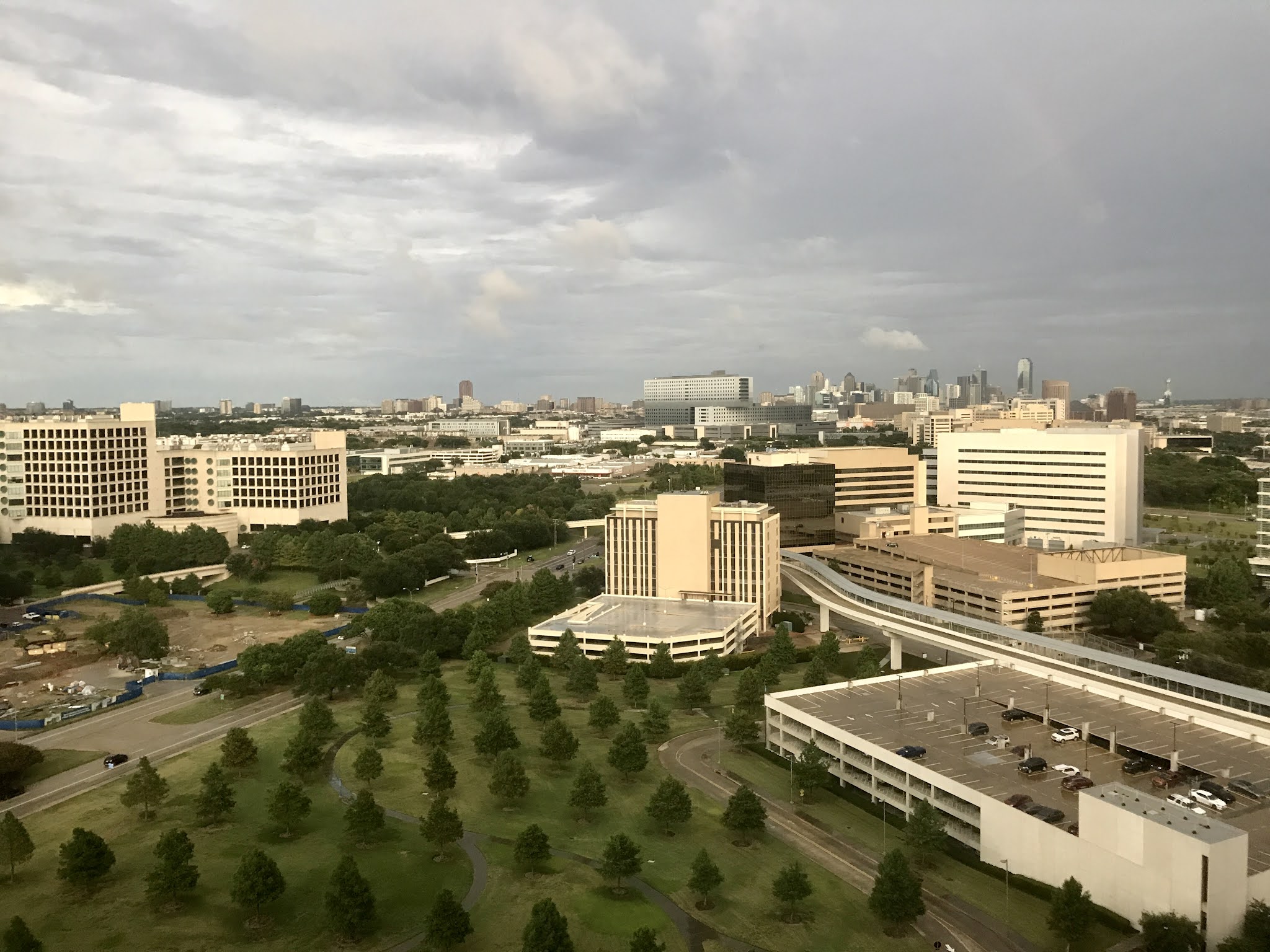
This is the view from the UT Southwestern Clements University Hospital 12th floor. The 12th floor is the COVID floor, and it is where I spent most of the past couple of weeks.
In an earlier post, Vaccine Emotions, I mentioned "And no, the vaccine isn't some sort of magical COVID shield. It's 90% effective in healthy individuals, likely less in the immunocompromised." I wrote that post back in December when I received my first dose of the Pfizer COVID vaccine. I had been accepted to be part of the National Vaccine Research Study for Transplant Recipients and three months after my second dose of the vaccine I had not yet build up any spike protein antibodies. This did not mean that vaccination was not effective, just that the immunosuppressed may not develop the same response as people with a healthy immune system. Our hope is that the the vaccine did activate Memory T and B cells. I tried to talk my team into a third dose of the vaccine after my 3 month post vax labs came back negative, but they were reluctant to approve it due to lack of data on the effects of a third dose. Thing change rapidly as more information and data comes out, and my Team is now helping us get the 3rd shot.
I have not yet received the third dose because... I was infected with the SARS-COV-2 (COVID-19) virus. I thought I was coming down with a Summer Cold. Standard protocol for me and colds is a steroid taper and antibiotics. So I contacted the Team and went in for a PCR just to verify it was a cold and found that nope, I hit the COVID lottery.
Monday, January 11, 2021
Lung Transplants and Self Image
I saw this beautiful post on Facebook that both celebrated a two year anniversary and talked about body image with a post transplant body. Shared with permission.
Kassandra's post got me to thinking about my own body and self images. It also got me thinking about how the procedures I've undergone, and the medications I take, have changed my body.
Each of my scars is a story. They are a permanent journal of my VATS Biopsy, my lung transplant, and my Nissen Fundoplication. They pair nicely with my earlier scars, keloids from burns when I was 4 years old, scars from a motorcycle wreck or two, and playing sandlot football. Like Skillet sings in their song "You Ain't Ready", "What doesn't kill me makes me who I am". These scars and my tattoos are a good visual record of who I am.
This is me still swollen from my lung transplant. I had to lose a lot of weight to be transplanted and at the time of my surgery I was still heavy, and being swollen kinda makes me look like a grape. After my procedure I continued to lose weight until I got to a healthy goal.
Here I am healed and at (or at least near) my goal weight:
As you can see, lining up my nipples wasn't a very high priority when they put me back together 😎 what you can't see is that the nerves to my nipples are damaged and they are always sore. Loose fitting shirts with stiff/rough fabric really bothers them and some things that used to be very enjoyable can now be quite painful. Another thing you can't see is how they lined up my ribs after the procedure. My left side is perfect. I can tell where I was split, but even by feeling most people probably couldn't. My right side is a little out of line. If someone looks for it now they could probably pick it out, if they felt for it they would definitely be able to tell. I can also feel my Clamshell Sternometry Wires. None of this is a big deal and sure beats what would have happened without the transplant.
My intent with this post was to follow Kassandra's example and share some of the post transplant realities that do have an effect on my self/body image.
I spend one heck of a lot of energy trying to appear 'normal' when out and about. Losing 60% of my post-transplant highest lung function due to my chronic rejection is hard to hide. I walk slower than most, and if I try to walk faster I end up out of breath and having to take a break. I'm also about 15 pounds heavier than where I look and feel at my best. My team wants this weight so when things go sideways for a bit I have the energy reserves available to comfortably get to the other side.
I guess that the main thing that bothers me is my voice. Between the transplant, all the bronchoscopies, and the various other ...scopies with cameras and probes down my throat, my voice isn't what it should be. Phone conversations and even some in-person conversations can be difficult. My voice is the one thing that I am really self conscious about.
I've lost a lot of bone density due to the meds and I'm over 1" shorter than I was pre-transplant. The prednisone has made my skin pretty thin, and avoiding the sun makes me pale. I'm on Warfarin since the Pulmonary Embolism, so when someone misses an IV poke, the blood splotch can last for over a month. My spleen is enlarged, it's grown enough that you can tell just looking at me if you know what to look for. We're not sure what is causing that, but not much to do about it at the moment. So if someone's paying attention, they can tell that I'm not 'normal' healthy.
Like Kassandra mentioned, acne is a thing with the meds. I get it on my face and chest. Sometimes it's painful acne
In reality, any body or self image issues I may have after my transplant are insignificant compared to life before transplant. I almost feel guilty talking about them, almost like I'm disrespecting this wonderful gift given to me by my donor family. I am alive, and I am in much better shape than I was for at least a year prior to my transplant. I'm able to take care of my Sweetie and share in our children's and grandchildren's lives. Life really is good, and even though I'm not 'normal' healthy, I am enjoying being post-transplant, on long term steroid and immunosuppressants, and being treated for chronic rejection healthy 😎
Monday, January 4, 2021
Annual Exams
January 1st marked the 6th anniversary of my lung transplant. If you want to know more about the procedure, I wrote about it here. An important part of living life with new lungs is all the monitoring we undergo to check how our lungs are doing and how the rest of our body is handling all the medications we take. Every year we have our annual examinations and I started mine today.
Today was labs (a few vials of blood and 22 results so far), two ultrasounds, a CT scan and a chest X-ray. A couple of routine tests that are normally done are being postponed this year due to COVID. This is both to minimize exposure and free up resources for more important things. I have a bone density test and the full pulmonary function test along with arterial blood gas next month. I expect the bone density test to show more loss due to my meds, and the PFT should be similar to last year's, except for maybe DLCO.
Now, why do I expect the PFT to be similar to last year when I am in chronic rejection? Drum roll please... Because my CT scan indicated that my lungs are stable, with no changes from last year.
Lungs and pleura: No pleural effusion is seen. Right upper lobe collapse with underlying bronchiectasis is again seen. Stable right middle lobe volume loss noted. Stable tubular density within the lingula with associated scarring noted. Stable reticulation within the periphery of both lower lobes noted. Few scattered punctate nodular densities are stable bilaterally. Air trapping again noted. No new pulmonary lesions identified.That result is just plain awesome. The upper lobe in my right lung collapsed 4 times in 2018 before it became permanent and the middle lobe issue occured in 2019. I'm very happy the middle lobe issue hasn't progressed and there are no indications of progressing chronic rejection. My home spirometry 0n 1/1/20 and 1/1/21 are basically the same. If you average my spiro results from the 1st week of 2020 and average the results from the 1st week of 2021, my home spirometry has actually up just a tad. Add the CT result to my home spirometry, and it's looking like the ECP Clinical Trial I'm participating in is working. This is very exciting news for me, and for the lung transplant community. Having a potentially effective treatment for chronic rejection gives hope for many of us.
Monday, August 3, 2020
The Roller Coaster Ride That is 2020
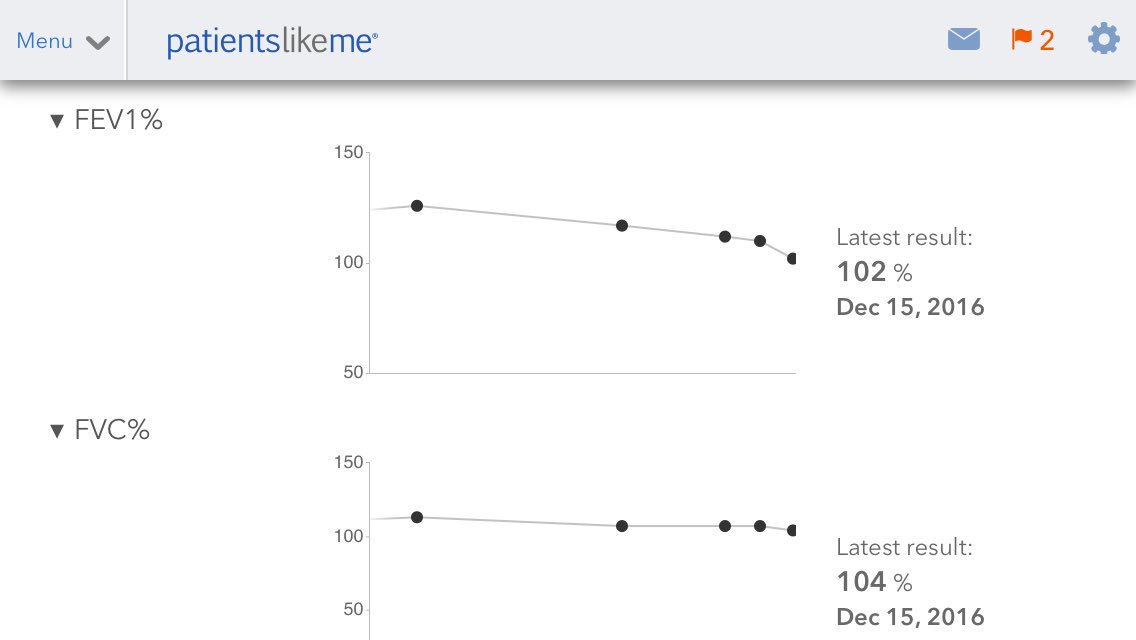
This chart of my lung function over the past 5 years is a good visual diary of my life with new lungs.
Sunday, January 26, 2020
Pulmonary Embolism - My Latest Adventure
The Cliff Notes version is that I had a Pulmonary Embolism (blood clot in my right lung). My Team decided to clear the clot using Thrombolysis to deliver medication via a catheter right to the clot in my lung. This resulted in a two day stay in the ICU and quickly cleared the clot. I spent a few more days in the hospital while they got me stabilized and am now back home. I'm a bit wrung out, but not much the worse for wear.
Now for the long version if you are interested.
The day of my Pulmonary Embolism (PE) started out just like any other day. Woke up, took meds, did computer stuff and took more meds. I took a shower, shaved and all that stuff with no problems. It takes a little longer to get that routine done due to the rejection, but this did not take any longer or use more energy than usual. We went to lunch and on the way I stopped for gas. Other than a vagrant hassling me a couple of times, getting gas was issue free. We went to Raising Cane's Chicken Fingers for lunch, and this is where the issues started. I got very out of breath just walking from the car into the restaurant. I ordered and sat down. When I went to pick up our food, I could hardly make it back to the table I was so out of breath. I asked my Sweetie to get to-go boxes as I wanted to get the heck out of there. By the time she got back to the table I was feeling a little better and tried to eat. I got one chicken tender down before I had to go. By the time we got home, I felt better, but still a bit out of breath. I took my vitals and my pulse was elevated into the mid 120's, blood pressure was pretty much normal, and my spirometry was normal. The normal spiro confused me, I thought I was having an acute rejection episode going on. I called my Team and they said to come into the ER. It's been so long that I've spent an overnight in the hospital that I didn't have a go bag ready. I went to get some stuff gathered and started having a really hard time. My heart rate went up to over 150 and I was scary out of breath. There was no way I could drive so called 911. The 911 operator was awesome. Lots of people can't understand me over the phone in the best of times, she got everything perfect, the first time. You may be wondering why my wife wasn't helping me more, she has Alzheimer's and was doing her best to keep me comfortable and help out. When the ambulance and fire truck arrived, I explained that I had to go to UT Southwestern and asked if my Sweetie could ride with us. They said yes to both which took a huge load off of my mind.
When we got to the ER they did the routine ER stuff. My team had already been in contact with the ER doctor and they were ready for me. I was sent for a CT of my lungs with contrast fairly quickly. My daily at-home vitals and spirometry, and the data I got prior to calling the ambulance, helped them narrow down the possible issues quickly and I did not have to have a bronchoscopy to rule out acute rejection. The CT Scan showed:
There is an acute branching moderate-sized pulmonary embolus in the lateral and posterobasilar segmental arterial branches of the right lower lobe.Basically a blood clot in the lower lobe of my right lung. While in the ER we did an ultrasound of my legs to check for DVT blood clots in my legs. There were none. A room opened up for me and I left the ER for the 10th Floor. The 10th floor at UTSW is my home away from home.
Since I'm a lung transplant recipient, it is important that we quickly clear the clot. I was placed on an IV of Heparin and scheduled for Thrombolysis. Basically a catheter was inserted into my Jugular Vein, through my heart and into my Pulmonary Artery. The catheter was guided to the clot so medication could be administered right on the clot. The medication (tPA) was delivered through the catheter and Heparin was delivered via a sheath around the catheter. Now comes the rough part of this episode.
I was transferred from surgery to the ICU with my own nurse and everything. The major concern while receiving this clot buster medication is bleeding. Bleeding can happen anywhere so I was pretty much continuously monitored. Every half hour I had to answer questions about where I was at, what month/year it was... for signs of bleeding in my brain. All this time I am a bit out of breath and I have to admit that panic/anxiety tried to take over a couple of times through the night. An Ultrasound Tech came in to check for clots in my arms and shoulders and this really helped to break the cycle of panic and I was able to keep it from taking over. I was scheduled for them to go in and see how the clot was doing first thing in the morning. About an hour before I was supposed to go down for the procedure, I experienced severe nausea. Dry heaving over and over again. The regular anti nausea med didn't help much, but the second one took care of the issue and I was fine by the time I got back to surgery. When they went in to look at the clot it was gone so they were able to remove the catheter. That was a huge relief. One more night in the ICU for monitoring then I was back on the floor.
The goal when I got back on the floor was to get my Warfarin dose right to keep my INR in the therapeutic range.
From ambulance ride to ride home was Saturday to Saturday. I have a new med and new labs, but I'm not much worse for wear.
Like Skillet sings in the song "You Ain't Ready":
"What doesn't kill me makes me who I am"I am very thankful to my donor family for the gift of these lungs that have done me so well for the past 5 years, for my Team who work so hard to keep me healthy, and to the Lord for making everything right.
Wednesday, October 9, 2019
Checking In
I am kind of excited that it's coming up on a full year since I've been in the hospital. Excited and a little superstitious about mentioning it. About this time last year the upper lobe of my right lung collapsed several times and we never did figure out why. There is permanent damage to that part of my lung, but it has not progressed.
I went to my once every 3 month check in with the Team on Monday, and everything is stable. X-ray results indicate "Postsurgical changes of bilateral lung transplant. No cardiomegaly. No effusion, pneumothorax or focal consolidation. Stable right apical pleural-parenchymal thickening. No acute osseous findings." and all of my labs look good. The medications have been rough on my kidneys and my Creatinine levels run high and I remain well within my normal band, 1.58 mg/dl this time.
Thursday, May 2, 2019
I'm Stable and the Dallas Stars are Rocking It.
As a matter of fact I'm doing quite well. I almost don't want to talk about it so I don't jinx things. This is the first time I've made it to May in a new year without having to be admitted to the hospital at least once. I'm very happy about this accomplishment.
If you've been reading along, you know that I am having issues. I am rejecting my lungs, but the rejection has been stabilized. The official name is Chronic Lung Allograft Dysfunction (CLAD). My type of rejection is primarily obstructive (Bronchiolits Obliterans Syndrome - BOS), and I am classified as BOS 3. There are also some restrictive components with my rejection. but I am primarily BOS. Chronic rejection is a bad thought for those of us living with new lungs. There isn't any "cure" for chronic rejection and the articles you find during a web search don't offer much in the way of hope. Pretty much like web searches for IPF. But just because there is not cure does not mean there is nothing for us to do. My Team has worked hard to get me stabilized a couple of times now, and I am enjoying my current stability. My latest X-Rays indicated:
1. Stable right upper lobe volume loss with underlying bronchiectasis.The volume loss indicated in the X-Ray results is because the upper lobe of my right lung has collapsed three times that I'm aware of, the last was on Christmas Day while we were visiting family. I was cooking a rib roast when it happened. Dinner turned out awesome because I didn't let anyone know until we got back to Texas. Seriously, there wasn't much anyone could do other than what I had already been doing so it wasn't an emergency. I did visit the Team when we got back and things were as expected. Later, at my January annual visit we found that the middle lobe was starting to also have issues. So I'm happy to see that both lobes are stable from January. Stable is good.
2. Stable mild right middle lobe volume loss. No acute consolidation.
Keeping these lung healthy does come at a cost, but well worth it. The medicine that is keeping me alive is kinda rough on the rest of my body. My list of Current Health Issues listed on MyChart is becoming a bit of a long read. I'd list the major issues, but really don't want to come across as complaining. I really don't feel negative about any of this. I am still alive and life is wonderful. Yesterday we enjoyed our granddaughters orchestra concert, and before that we watch her win the sparring portions of two Taekwondo tournaments. Both times she beat boys older than her. She's on top of the world. This Summer another granddaughter is coming to stay with us for awhile, we get to share with her some of the really awesome stuff that the DFW Metroplex has to offer. So yes, the issues that come with a lung transplant have been worth it to me and my family.
If you are interested in some of the medication related issues that I'm experiencing, just ask. It would be a good topic for a future post.
Friday, February 1, 2019
Fourth Annual Post-Transplant Exam
With each anniversary, comes my annual post-transplant exam. The annual exam is basically a very thorough physical. The test/exams for the day included labs (14 vials), a CT of the chest, ultrasounds of my heart and abdomen, a bone density test, chest x-ray, a 6 minute walk test, arterial blood gas, a couple pulmonary function tests, and a physical exam.
The lab results were routine. My white blood cell count is a little high, 7.09x10(9)L. We prefer it to be a point or two lower and will adjust my meds a bit to get it down. My Creatinine, an indicator of kidney function, is high but not higher than what has become normal for me. I average about 1.4 mg/dl creatinine which indicates how hard the meds are on my kidneys. Other than that my labs were all good. Immune system properly suppressed, cholesterol and A1C are normal. and liver function is good.
My bone density exam showed the the meds continue to demineralize my bones. I've lost between 17 - 19% of the bone mineral density in my hips since my transplant. I'll be seeing my Mineral Metabolism Doc next month.
Now we get to the part of the exam that shows the condition of my lungs and progression of my chronic rejection. The X-rays, CT of my chest, and full Pulmonary Function Tests offer a solid picture of where I stand at the moment. You have to look at all three together to get the full picture.
From my X-ray:
Lungs and pleura: Stable right upper lobe volume loss with underlying bronchiectasis noted. Mild right middle lobe volume loss seen. No acute consolidation.From the CT:
IMPRESSION:And from my PFT's:
1. Complete right upper lobe collapse with mild bronchiectasis as before. Stable mild bronchiectasis and volume loss of the middle lobe. No endobronchial mass identified.
2. Air trapping on expiratory phase images is suggestive of small airway disease such as bronchiolitis obliterans.
3. Near complete resolution of previously noted groundglass opacities at the lung bases with few residual groundglass and reticular opacities at the left costophrenic recess.
Forced expiratory flows are severely reduced with a moderate reduction in the forced vital capacity.The most interesting part of these results relate to my collapsed lung. I have been having issues with the upper lobe of my right lung collapsing. We've been able to get it reinflated a couple of times, but it appears that it is going to be collapsed more often than not. What is new in these results is volume loss in my middle lobe. That's not at all what I was expecting, and a bit disheartening. I'm not quite as stable as I had hoped.
No bronchodilator response
Lung volumes reveal a normal total lung capacity with incomplete exhalation of the vital capacity and trapping of a large residual volume
Diffusion capacity is moderately reduced
Sever obstructive ventilatory defect with air trapping and impaired diffusion. COPE/Emphysema. Vascular disease, Bronchiolitis cannot be excluded
The air trapping noted in these findings is indicative of my chronic rejection. The air trapping combined with the >50% loss in lung volume from my highest results shows the progress of the rejection.
The good news about these results is the 'Near complete resolution of previously noted groundglass opacities..." This indicates that we have addressed the unidentified infection that was previously an issue.
So the end result of this exam is that we will be adjusting my meds a bit to drop the WBC, and I'll be using Acapella airway clearing device along with my incentive spirometer each day to potentially help with the collapsing lung.
Update: My goal after this visit is to stay out of the clinic and hospital until my next quarterly exam :)
Since every blog post needs an image, here is the box we sit in for our full pulmonary function tests.
Tuesday, March 20, 2018
Quick Update and a Question
I did reach the major milestone of celebrating my 3 year transplant anniversary. Recent Scientific Registry of Transplant Recipients (SRTR) data shows that I'm a member of the 64% who have done so. Not only have I survived, I have thrived. Yes, there have been setbacks. And yes, I am having some issues that I will talk about in a bit, but I have survived. I am doing much better than I was the year prior to my transplant. I am not back on supplemental oxygen, and I am enjoying life.
Life is good, and my new lungs have been a wonderful gift from a very generous donor family. Now part of package that comes with the gift of new lungs is the knowledge that there will be setbacks, and that new lungs don't last forever. My lungs are on the downward slope side of the post transplant lung capacity bell curve.
We are not sure what is going on with the little dip at the tail end of the graphs. It may be a continuation of the chronic rejection that started near mid-chart, or it may be triggered by something else entirely. A steroid pulse over the weekend followed by a taper that I am on now seem to have stabilized things once again. We'll see soon enough. I've also been having issues with very low white blood cell count and other related labs so my meds are all out of kilter. Again just part of the package.
I am a bit reluctant to talk about this new chapter in my journey as I really don't want to discourage anyone who is in the middle of making the decision about lung transplant. Thinking about it, I feel that writing about what is going on may be helpful to some, I know information like this is something that I look for, and cannot find.
So what do you think? Are you interested in reading about my annual testing results, hearing about what's going on with the new lungs, and following along this new chapter in my journey?
Let me know, I'm really interested in your thoughts.
Wednesday, March 15, 2017
A Couple Articles About Life With New Lungs
The first article is a blog post published by the Pink Socks Tribe. I first mentioned Nick and Pink Socks when talking about my experiences at MedicineX.
The post talked about my Life With New Lungs and I tried to convey in this post is the importance of life's moments. It is the moments that shape who we are, and it is the moments we share with others that will be remembered long after we are gone. One thing I've learned through my experience at being so close to death is to really embrace those special moments. I really kind of enjoy the pink lungs Nick and Company came up with to go with the post.
The next article was published by the Stanford Medicine Scope Blog. The gift of life: Living with new lungs talks a bit more about living with new lungs and becoming resilient.
Head on over and read the articles, let me know what you think.
The Primal Transplant In The News on the sidebar links to more interviews and articles that I've been involved with over the years.
Saturday, February 25, 2017
Home From the Hospital, Next Steps - 2/25/17
I was released from UT Southwestern yesterday afternoon after my Team came to a pretty definitive conclusion as to what has caused my recent decline in lung function.
I recently posted about the "Potential Complications of Lung Transplant - Part 1 and Part 2". Part 2 included some of the Gastrointestinal Complications that could occur during life after transplant. One of the potential complications mentioned was:
Long-term gastrointestinal complications are common in lung transplant recipients, likely due to higher doses of immunosuppressive medications. ... Long-term common complaints are of nausea, vomiting, gastroesophageal reflux disease,.. It is estimated that over 60% of patients who have undergone lung transplant have at least one gastrointestinal complaint, and while mild, it can have significant impact on the quality of life of these patients.My issue is reflux. An Esophagram found "Gastroesophageal reflux to the level of the clavicles noted in the supine position." This is a major change from my pre-transpolant test which indicated zero reflux.
We will have to address this issue aggressively. Post-transplant reflux is not a diet or lifestyle issue, it is due to the medications.
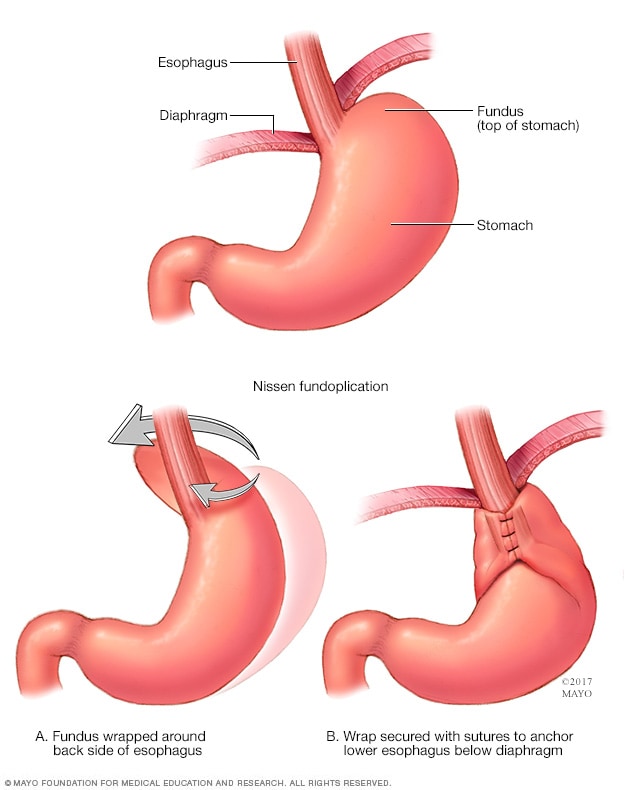
After some more testing, the team will decide between one of two options. First option is to perform a Nissen Fundoplication, also called a Nissen Wrap.
IMPRESSION:
1. This is a normal solid phase gastric emptying study.
FINDINGS:The next two exams are an Esophageal Motility Study and a PH Impedance Test. The Esophageal Motility study will determine if the muscles in my esophagus are working properly or not. The PH Impedance will verify the extent of the reflux. The motility study is the important one as this will determine which path we take to address the reflux. If the muscles in my esophagus are not working properly, performing the wrap would not be a good idea and I will be placed on the long term feeding tube.
At 1 hour, 15% had emptied (normal 10-70%).
At 4 hours, 95% had emptied (normal greater than 90%).
I could not swallow properly following my transplant and came home with a temporary feeding tube and was not allowed to take anything by mouth. As I did have this previous issue, I feel the odds of being placed on a permanent feeding tube are fairly high. Still hoping for the wrap though :)
This really bothered me for awhile, more so than I thought it should. The steroid pulse that I had just finished up might have been a part of it, but also is that fact that this isn't one of the complications that I had thought much about and prepared myself for. I've done such a good job of countering many of the other mental and physical effects of the meds that reflux just didn't cross my mind. It's not like there was anything I could do to try and keep that esopageal sphincter and the muscles in my esophagus working properly. I'm pretty close to acceptance now, and of course planning either future.
Either way this goes I will still have a future, and it will continue to be awesome. I can't wait to experience all of the new special moments that are ahead of me.
The next studies are scheduled for March 7th. We have to wait until after the prophylactic PPI's that I have been taking clear my system so they can achieve an accurate PH study.
Thursday, February 23, 2017
Update From the Hospital - 2/23/17
All settled in at my home away from home on the 10th floor of the UT Southwestern University Hospital. I first commented on my recent decline in lung function back in December. I did a high dose steroid pulse in December and that kept me stable for a few days, then the slow decline continued. I was admitted to the hospital on Monday and they are working on finding the trigger for this issue.
My HRCT is stable compared to my previous scans and X-rays look good. I had a bronchoscopy with biopsy and those results are also good, we are still waiting on the cultures. My VQ/Ventilation Perfusion Scan also looked good to my eye, much better than my pre-transplant images and I noticed no change from my last scan. My ultrasounds and echocardiogram were also good. The only test that indicated an issue was an esophagram (barium swallow). This showed a little reflux when laying on my back. I think it was only with my legs raised. This could be the cause of inflammation that is having an effect on my lung capacity. I really don't have any symptoms of reflux, and my diet is not one that would cause reflux. I'm looking forward to discussing this with my Dr. during rounds tomorrow.
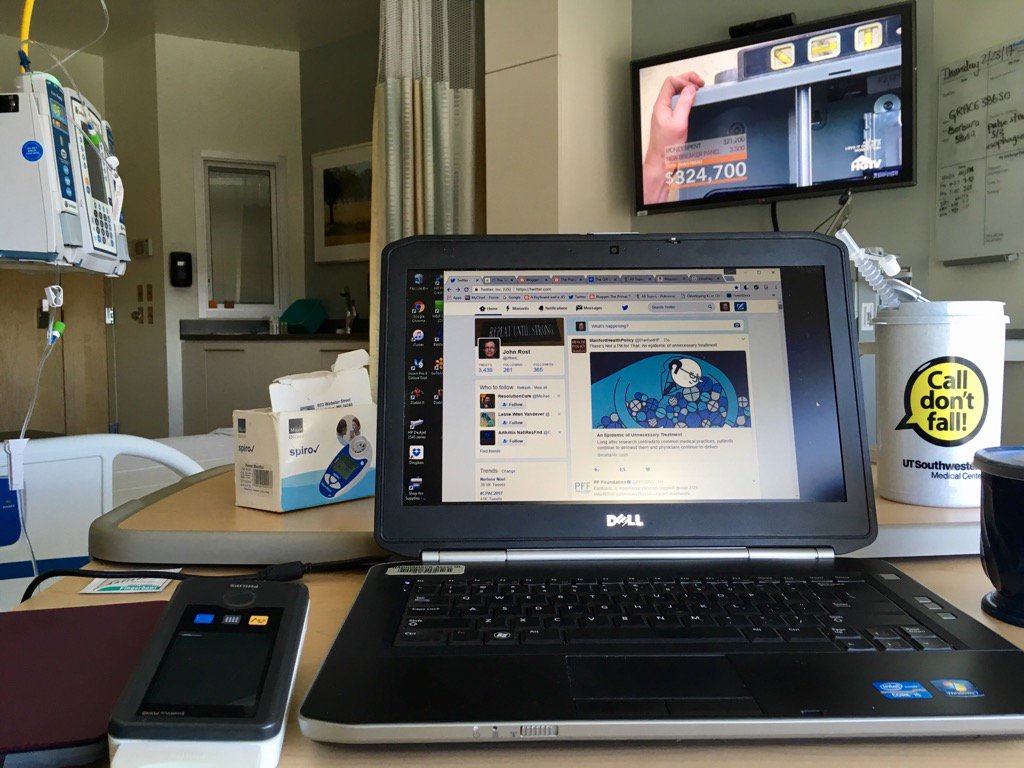
I've been on an IV steroid pulse for the past three days and other than an expected dip in lung function following my bronch, my lung capacity has stabilized for the moment. Tomorrow we make the decision on progressing to a treatment with more umph to ensure this issue gets resolved. It is likely that is the direction we will go, but the esophagram may alter that plan. If we go with the treatment, I'll be here for 10 more days. Good thing they have free WiFi :) The coffee could really use some improvement though.
I feel good, much better than I did the year prior to my transplant. This is just an 'issue', something that is part of living a life with new lungs. Becoming resilient is an important part of life after transplant. There will be setbacks, I trust my team to resolve these issues and get me back to life with my Sweetie.
My test results should start popping up in MyChart tomorrow. I'll post anything that looks interesting. I find all of it interesting so I'll at least share the major findings.
Wednesday, February 22, 2017
Monday Macros - The Hospital Edition 2/20/17
Weight = 152. Weight gain this period = 1 lb. Total weight loss = 99 lbs. Macros for the week = Carb/Fat/Prot - 14/59/27%. Daily avg cals = 2.234. Body Fat = 12.1%
Monday began with taking my vitals, eating a quick breakfast and heading into the Clinic.
I have continued to experience the decline in my lung capacity that I reported back in December. The steroid pulse that we did really didn't do much to stop the progress of the decline. I should have been back in Clinic in early January, but found I had an insurance 'issue'.
It's a long story but I've been fighting for insurance for the past month and a half.. It took a visit to my Congressman's office, intervention by my State Senator and lots of help from the TX Dept of Ins to get things straightened out. As of Mon, I have insurance retroactive back to Feb. 1st.
At Monday's Clinic visit we decided that I needed to be admitted so here I am at UT Southwestern University Hospital. The 10th floor is my home away from home.
So far I've had three ultrasounds, one HRCT, labs and more labs, a bronchoscopy with biopsy and more labs, and X-ray. I'll likely be having a ventilation perfusion/VQ test done soon and might even throw a bone density in as it is due.
I've started another high dose steroid pulse and will probably try something with more umph when that is completed.
So far everything looks good, just waiting for pathology from the biopsy, but it doesn't look like I've damaged the lungs, that means I have a good chance of regaining lung function. That would be awesome.
I'll write more in a new post when we have more results and an action plan to talk about.
More Monday Macros
Saturday, December 31, 2016
New Year's Eve; 2014. The Day we Got The Call
Plans changed at just about straight up 6:00 that evening. A member of my Transplant Team called and said they might have a set of lungs for me. We experienced a 'Dry Run' in November, made it all the way to pre-op before they decided the lungs were not acceptable. This time was not quite a frantic as the first, but it was still a very emotional trip to the hospital. We grabbed out "Go" bag, dropped our granddaughter off at a friends, and headed to Dallas.
I've been reading through my journals from those days just before and after my transplant. Here is what I posted in one to let my friends know what was going on:
12-31-2014, 10:16 PM
Here we go again
Life on the list. Received 'The Call' at 6:00 PM and am back at the hospital waiting to see if these lungs are acceptable.
The doctor stopped by after I typed the above. It really looks like this is going to be a go. It sounds like the donor was fairly young. Please think of the family in you thoughts and prayers.As we all know, yes, these lungs were much more than acceptable. Turns out they are pretty awesome.
01-01-2015, 04:39 AM
Thanks everyone. Right now it looks like I am scheduled for 8:00 this morning.And then my first post with my new lungs:
01-04-2015, 05:51 PM
The procedure was a success I'm still in a lot of pain, but improving hourlyAnd improve I did. Yep, there have been a couple of setbacks, but that is just part of Life With New Lungs. Three steps forward, two steps back. I'm still working on my most recent issue, but I think this one should be resolved soon.
I look at that image of my Sweetie and I with mixed emotions. We were excited at the prospect of a new life with new lungs. We had hope for the future and we look happy. At the same moment a family was having one of the worst days of their lives. My donor family lost a loved one on New Year's Eve and the holidays will never be the same for them again. I think of them often and hope that they receive some comfort in knowing that their loved one has helped so many others.
On what has to be one of the worst days of their lives, in the midst of their grief while the whole world celebrated New Year's Eve, my donor family made the decision to offer the gift of life to myself and others.
I can't think of a more selfless and wonderful gift.
New Year's Resolution? I really don't have anything to resolve. I try to live my life in gratitude to my donor family and take the best care I can of their precious gift.
I can't express my appreciation for what they have done for me, and for my family. I think of my donor, and my donor family each and every day. They are special.
Thursday, December 1, 2016
Back to the Clinic - 12/1/16
We take a few steps forward, then a couple steps back. Sometimes more than a couple in the wrong direction, but so far I've recovered and progressed after each setback. Over the past month or so my lung capacity has been slowly and consistently decreasing.
I feel good, and my routine exercise capacity hasn't been affected. I can tell there's something going on when I do higher intensity moves like continuous kettlebell swings, but for the most part it's business as usual.
I went to Clinic last week and found a rhinovirus in my sinuses, not the variation that would have had me admitted to the hospital for treatment. Just a silly little virus. The Team put me on a light prednisone taper. Just started at 40 mg/day. That's only 4 time my maintenance dose. It did stop the decline, but did not reverse the trend. Once the taper was done my capacity started dropping again.
So back to clinic today for the full workup. Labs, x-rays, and everything else look good. First thing tomorrow morning is a High Resolution CT Scan then off to the hospital for a bronchoscopy with a biopsy.
It's not a big deal really, I've had a lot of bronch's. Depending on which doctor does the procedure, they are sometimes the best sleep I get all month :)
I would like to make it between routine clinic visits without an issue more often. But as the Team Doc we saw today said "Some people are just really sensitive to viruses". That's me. My immune system can't handle a silly little virus so goes after the lungs.
I expect the end result of tomorrow's procedure will be a stronger prednisone taper, starting with at least 60 mg/day, probably higher. I'm sure the steroid will do its job and be back to normal in a couple of weeks.
This'll set my new fitness plan back a week or two, but that's not a big deal either. I expected a setback or three so started the program earlier than necessary. See.. planning, it is a good thing.
We all have setbacks, and when you are living with new lungs they can be expected and planned for. That's why our teams are so insistent about our taking our vitals every day, doing our home pulmonary function testing (PFT's) every day, and closely monitoring our own health in between clinic visits.
Update - 12/2/16
We were out the door at 6:15 this morning for the HRCT, then a quick trip across the street to the hospital for the bronchosopy.
The doctor who did the bronch is one of my favorites on the Team. She read the HRCT while going over what we were going to do during the bronch. The CT looked good, nothing out of the normal.
The bronch went very well and I'm home resting. We'll have the results next week and go on from there.
Update - 12/3/16
Electronic records are pretty awesome. This popped up in my in-box today.
FINDINGS
The vocal cords move appropriate to phonation.
The trachea is moist and unremarkable.
The main carina is sharp and non-displaced.
The right anastamosis was intact with no evidence of stenosis or dehiscense.
The RUL, RML and RLL were visualized. There were no lesions or secretions.
The left anastamosis was intact with no evidence of stenosis or dehiscense.
The LUL, lingula and LLL were visualized. There were no lesions and no secretions.
A BAL of the RML was performed. Specimen sent to micro.
A TBBx of the RLL were performed. Specimen sent to micro and pathology.
There was no noticeable bleeding at the end of the procedure.
No evidence of pneumothorax post procedure
No complications
EBL < 5 cc
...RECOMMENDATIONS Follow cultures and biopsy resultsSo far so good.
Update - 12/8/16
CT results posted on MyChart this morning.
I have to admit that when I read "bronchiolitis obliterans", I kind of went into mental crisis mode. Bronchiolitis Obliterans Syndrome is a scary thing to mention to a lung transplant recipient.IMPRESSION:
1. A few scattered tiny nodular densities which may be inflammatory.
2. There is bibasilar mosaicism. The differential includes bronchiolitis obliterans
FOLLOW-UP RECOMMENDATIONS: Per clinical team.
Final Signed by...Narrative
EXAM: CT CHEST WO IV CONTRAST
HISTORY: 55 years old Male with lung transplant with declining lung function
TECHNIQUE: Volumetric data acquisition through the chest without IV contrast reconstructed as contiguous axial volume, MIP images, and multiplanar coronal and sagittal reconstructions per department protocol.
COMPARISON: 1/28/16
FINDINGS:
Lines and tubes: None.
Lungs and pleura: The trachea and central airways are patent. There is bronchial wall thickening. The lungs are remarkable for focal scarring and or atelectasis in the inferior lingula. There are no infiltrates or pleural effusions. There is patchy bibasilar groundglass.
So I sent off a message to my Transplant Coordinator and this is part of his reply:
Good Morning John,He continued with:
Your biopsies were perfect, A0B0 ( no cellular rejection or airway inflammation), all of the pathology / staining was unremarkable. Cultures were negative other than "normal respiratory tract flora". I had... review both your most recent and last CT chest images and he was "underwhelmed"...
...In my personal opinion your most recent CT looked better than the last.After a bit more conversation, I feel much better. Not yet time to break out my bottle of Sink the Bismark.
We also had to go to UTSW for a Dermatology follow up this morning. She had to freeze off a couple more spots on my head. That was a little irksome as I have recently completed three Blue Light Treatments. Hopefully we'll be able to get ahead of these issues with continued prevention. I really like our Dermatologist, she was able to see my Sweetie and I together in the same appointment. That really helps with scheduling the day. She's also been very helpful in getting my Sweetie some much needed non-derm related care.
So it's been and up down all around kind of day so far. A bright spot was getting a text from a transplant friend this morning right after I read the CT results. She was just checking in, and it came at the perfect time.
Now it's time to go swing my kettlebells. Kettlebells fix everything :)
Update - 12/15/15
Back to clinic for more tests and follow up with the team. My lung function has continued to drop as proven by the clinic Respiratory Therapist.
My annual exam is due next month, so we moved some of the tests up to today. Labs included 15 vials (half of my max draw) then I was off to ultrasound. Found that all of my pieces parts are still there. Then to Clinic for PFT's, 6MWT, and consultation with the Team.
We went over my CT's with a fine tooth comb. Yes, there is some air trapping, but all in all the lungs look as awesome as ever. The Six Minute Walk Test was pretty much the same as last year, which is as expected. My blood oxygen saturation stayed at 100% during the test, which is a wonderful thing.
End result of today's visit is that I'm going to be doing a IV Steroid Pulse at home over the next 3 days and have added another forever medication to my list. Azithromycin. It helps to prevent chronic rejection.
I'm pretty confident that the steroid pulse is going to do the trick. Just have to figure out how to do my kettlebell routine with an IV stuck in my arm :)
Update - 12/24/16
The steroid pulse has seemed to stop the decline, I've even recovered a little bit of lost lung function, but has settled out at about 15% lower than my max. I kind of feel bad being disturbed by this. I still have over a 5 liter FVC, which is amazing for an IPF transplant.
I've started a new forever antibiotic, Azithromycin. My Team also increased my Cellcept back up to 1000 mg twice/day. Seems my immune system is getting a little overactive.
I often wonder if all the things I do to stay healthy are a bit counterproductive. But they are working so far :)